


There’s a particular kind of quiet that settles over a patio in early fall. The long dinners are behind you, the light shifts earlier, and everything you’ve built outdoors this year — the seating, the grill, the pots you finally got right – starts asking for a different kind of care.
This is the season that decides how your outdoor space looks next spring. Furniture left exposed through the first frosts – fades and cracks. Grills left uncovered rust from the inside out. Planters that aren’t moved or wrapped in time lose more than they should. None of it is dramatic. It just adds up, cover by cover, until the damage is done.
The good news: fall prep doesn’t take much. A few deliberate steps now — covering, cleaning, tucking things away properly — is the difference between an outdoor living space that ages well and one you’re replacing piece by piece.
1. Clean and Declutter Your Outdoor Space
Before preparing your patio for fall, start with a thorough cleaning and decluttering. Leaves, dirt, dust, and summer debris can build up over time, affecting your patio surfaces and causing unnecessary wear on outdoor furniture.
- Clear away dirt and debris: Sweep your patio or use a leaf blower to remove leaves, dirt, and other debris. Then, wipe down tables, chairs, and other surfaces with a mild cleaning solution suitable for the material, whether wood, metal, or wicker.
- Declutter your patio: Remove unused items, toys, planters, and other summer accessories to create a cleaner, more organized outdoor space and make fall maintenance easier.
- Check Drainage Before Fall Rain : Clean gutters, Clear patio drains, Remove leaves from drainage paths, Check downspouts, Look for areas where water pools, Make sure water isn’t draining toward the house. Plus you should check outdoor furniture placement so water can drain properly.
- Check Outdoor Lighting and Electrical Connections : Inspect outdoor lighting, Check exposed cords, Make sure connections are weather-rated. You also need to replace damaged cords too.
2. Patio Furniture with Covers : The First Thing to Protect
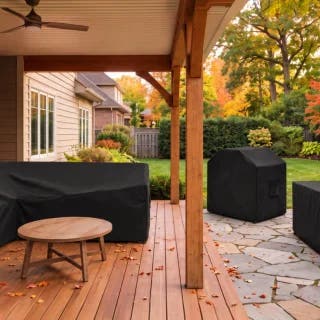
Outdoor furniture works harder than anything else in the yard and shows it the least — until it doesn’t. Wood swells and splits with repeated wet-dry cycles. Metal frames rust at the joints, where moisture sits longest. Cushions and fabric absorb humidity and hold onto it, which is how mildew gets started long before anyone notices.
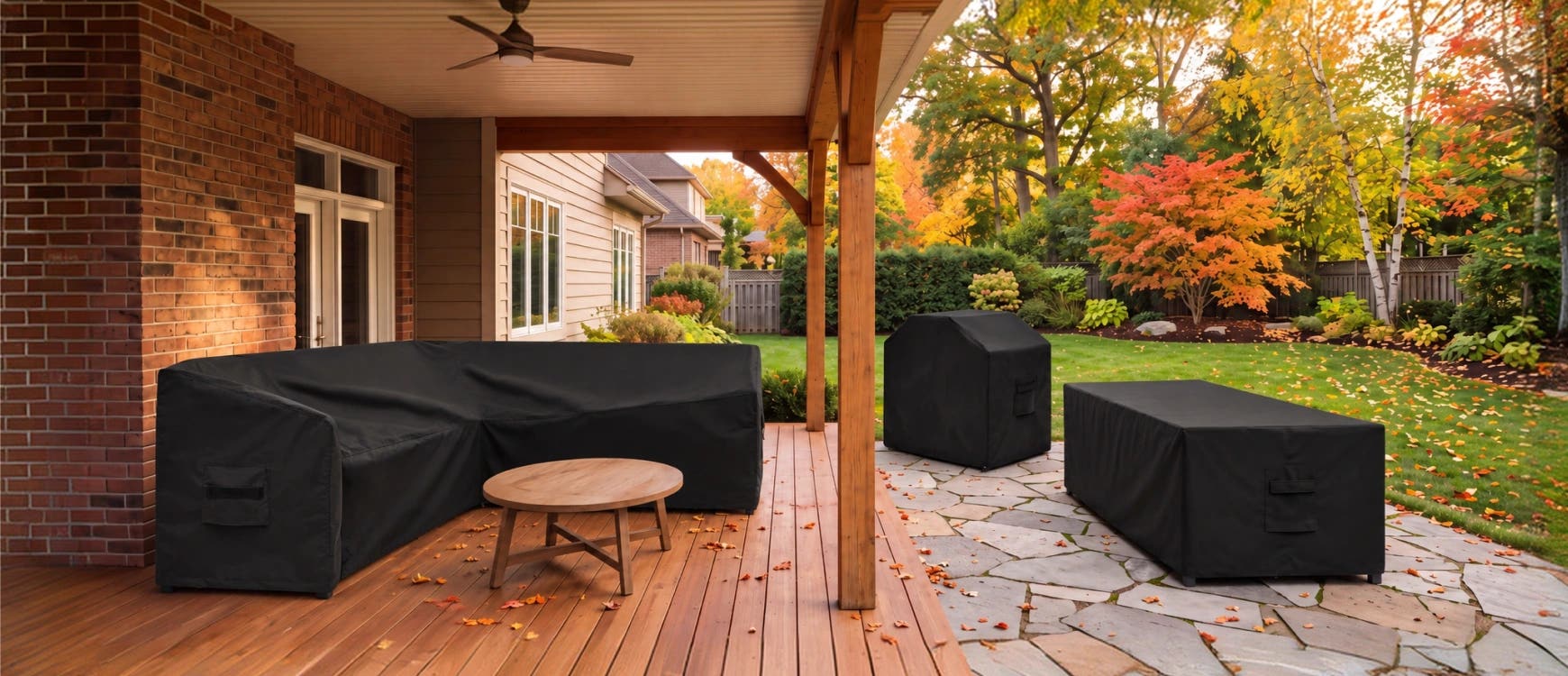
The fix is straightforward. Clean everything before you cover it — dirt and pollen trapped under a cover hold moisture against the surface. Let it dry fully, then choose outdoor furniture covers built for the shape and size you have. Remember, a well-fitted cover does far more than one that’s simply thrown over the top and left to flap in the wind.
For sectionals and modular seating, a properly fitted sectional couch cover matters more than people expect – gaps at the seams are where water gets in first. Cushions are worth storing indoors if you have the space; if not, breathable cushion covers that don’t trap condensation are the next best thing.
3. The Outdoor Kitchen, Grills Needs its Own Plan
Grills and outdoor kitchens get treated like they can handle anything, mostly because they’re built from metal and fire seems like the toughest test there is. But rust doesn’t care about heat resistance. Once fall rain starts hitting an exposed grill, moisture works into vents, hinges, and burner components, and by spring you’re troubleshooting instead of grilling.
A well-fitted grill cover is the simplest insurance you can buy for the whole setup. Look for something with venting – sealing a grill completely can trap condensation on the inside, which causes the exact problem you’re trying to prevent. For a full outdoor kitchen — counters, side burners, storage — matching outdoor kitchen covers protect the surfaces and hardware that are far more expensive to replace than a grill grate.
Before covering anything, give it one real cleaning: degrease, wipe it down, let it dry completely. Sealing in grease and moisture together is worse than leaving it uncovered.
4. Winterizing Plants: The Part People Forget
Furniture gets covered. Grills get covered. Plants usually get remembered too late.
Potted plants are more vulnerable than in-ground ones. Their roots have less insulation, and terracotta or thin plastic containers crack when the soil inside freezes and expands. Move what you can indoors or into a garage. For plants that need to stay outside, group pots together against a wall for shared warmth, and raise them off cold concrete with a stand or pallet.
For shrubs and other vulnerable plants that need to stay outdoors, use frost blankets or shrub protection bags to help shield them from frost and cold temperatures. Choose the protection based on the plant’s needs and local weather conditions, and follow the manufacturer’s instructions for proper use.
For anything too large to move, use frost cloth/burlap for suitable plants. The goal isn’t to make it airtight – it’s to buffer the worst of the cold snaps while still letting the plant breathe.
5.The Rest of the Yard
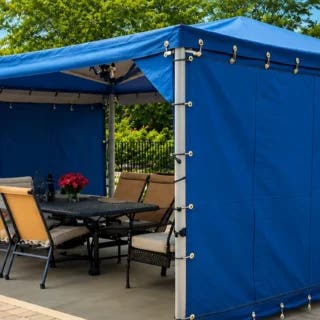
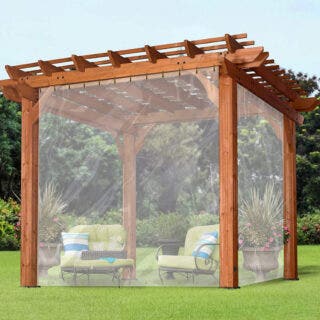
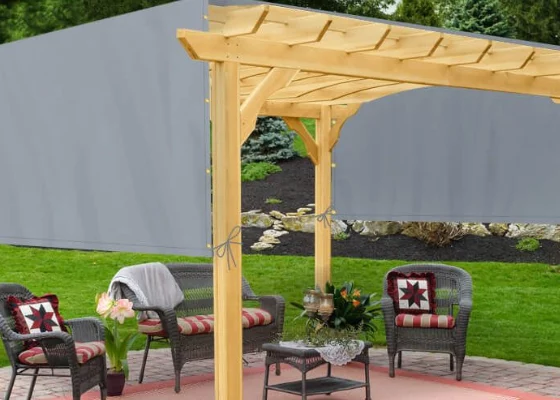
A few things worth doing before the season fully turns: Check that any pergola or awning hardware is tight; wind picks up in fall, and loose fittings are how storm damage starts.
If you have an outdoor rug or fabric shade sail, take it down or cover it. Fabric left exposed through fall’s freeze-thaw cycles wears out fast, regardless of how well it held up all summer.
A Season Worth Getting Right
None of this is complicated. It’s mostly attention, noticing what’s exposed, cleaning it, and giving it the right kind of cover before the weather turns. What you protect now is what you’ll actually get to enjoy again next spring, instead of replacing.
Outdoor living spaces are built slowly, piece by piece, over seasons. Fall prep is simply the step that makes sure all of that holds.
Published by Roop Srishti – SEO Manager, Covers & All
Roop is an Digital Marketing Enthusiast professional focused on driving growth and improving search visibility for Covers & All.






Recent Comments